Showing posts with label health. Show all posts

Tuesday, January 12, 2016

dvt

About six hours into the first of many flights from San Francisco to Bangalore, India a few weeks ago, my left calf started to hurt. By the time we arrived at G's cousins' home in Bangalore, the pain had spread from my knee to my toes, which were now numb. Instead of easing, the pain continued day after day. By about day three, I decided to call my mom. She quickly offered advice for icing the leg (my calf to be precise), keeping the leg over my heart, and using heated compresses. But what I really wanted to know was if leg/foot pain and numbness was something she usually encountered when traveling long distances. Despite her own foot pain, my mom is an avid traveler. She didn't think this was a normal occurrence.

So things didn't seem to be quite right. I had not experienced this level of pain while flying before. And it didn't seem to be easing up anytime soon. While at lunch on day four, the pain was so acute, I didn't know what to do. Fortunately, the restaurant was above a hair salon. Down in the salon, we convinced the pedicurist to massage my calves and feet. But nothing seemed to help. Where could I find a foam roller, my usual go to cure for leg cramping and pain? Surely Bangalore had its fair share of gyms and yoga studios. Maybe I could talk my way in? But then I thought, maybe at this point I should just leave the calf alone and try to enjoy India.

(this man definitely seems to be enjoying Bangalore)

Still writhing in pain, unable to sleep, I came out into the living room (where I got wifi signal) at about 5am on day five. Just then my phone began to beep. A lot. The messages started coming through. Mom had talked to dad (a doctor) and it seemed to them that I had a common traveler's condition: a deep vein thrombosis, or blood clot. I had all the symptoms. And I was taking a medication that additionally put me at risk. It seemed to them to be a no brainer: get to a hospital and get a doppler (ultrasound) of my left calf. But I'm in Bangalore. This is a lot easier said than done.

I called my mom. She started to tell me that I needed to seek medical attention asap. "This must be serious," I thought. My family has never been one to actually go to the emergency room or even the doctor's office. I basically have to be unconscious before having myself checked out my a medical professional. And then mom started telling me about all the people she knew about who had blood clots and died. Friends of friends. Friends of friends' children. Even famous journalists. Do you remember David Bloom? He died of a blood clot. Each name pushed me further and further into panic mode.

I immediately woke up Rama and Neetu. "I need to get to the hospital," I said. "I might have a blood clot." We jumped into the car for a quick (by India standards) ride, eventually walking into the Emergency Room of Apollo Hospital at a little past 6am. I walked right up to a Doctor. "I need to get checked for a DVT," I said. Then I sat down on a bed. I put on a gown. And I immediately spoke with two very sympathetic doctors. They ordered an EKG and a doppler.

Making the best of a scary situation

The key to the doppler (ultrasound) is to compare legs; one in significant pain against one without pain. The tech rubbed the wand up and down my leg, taking photos. The assistant positioned my leg for the tech and did as he said. When the tech first said "compress" the assistant squeezed my thigh. When the tech again said "compress" the assistant squeezed my calf. I immediately screamed out in pain. I'd never felt pain like that before. The assistant looked at me. "What happened?" she asked. I was speechless, trying to mouth the words. "The reason, I'm here...the pain...is here...don't squeeze...the pain...is here." She gave me a quizzical look and continued on. "Oh well," I thought, "at least the photos will be accurate."


A copy of the doppler ultrasound of my legs


In the end, there was no blood clot. I would be in and out of the hospital in less than three hours. There was no admission to the hospital during our vacation; no damage to my heart, lungs, or brain. So why the pain? Why the unending, un-ignorable pain? No answer. The prescribed treatment for my pain? Ibuprofen. Plus a referral to see a neurologist back in the US. Because the pain is most likely neuropathy related.

After checking out of the hospital, handwritten intake forms in tow, I stopped by the pharmacy for yet more ibuprofen. "How many do you want?" the pharmacy tech asked me. I pointed to the sheet of six pills in her hand. "5 rupees," she said. I handed her a 10 rupee note. When I went to take my change, she began to hand me a handful of candy. "No change," she told me. I was quick to reply. "No candy," I said. "I'll take six more pills." So she handed me five more pills and a piece candy. India, where you get change in the form of candy.

That night, before going to bed, I quickly checked my email as I usually do. In my inbox sat an article "sent from mom" entitled, "The legacy of reporter David Bloom - News." It's actually an interesting read.

Thanks, mom.

To see more of our non-hospital related photos from a somewhat epic journey to India, they can be found online here.

Tuesday, August 11, 2015

my dark day

For the many of us who have lost someone special, there are certain days of the year that make it hard to keep on moving forward, to keep on growing old. The deceased's birthday or the anniversary of the day he/she died is almost always harder for us than all other days in a given year. But since losing my older brother, the hardest day of the year for me has always been MY birthday. That's right, my own birthday. I still recognize my brother's birthday, the day of his diagnosis, and the day of his death. I light a Yahrtzeit candle. My family goes to the cemetery. We mark these events the same way everyone else does.

But the hardest day of the year, for me, is the day I turn yet another year older. Older than my big brother. From my perspective, he stopped aging at age 30. The day I turned 30, two and a half years after Dave passed away, I was a mess. But then I was okay. I was surrounded by good friends, who raised money for Brain Tumor Research. Well, I thought, I finally caught up to you big brother. Thirty's not so bad. 

But then I turned 31. I had officially outlived my older brother. I didn't do a single celebratory thing that day. I think I ate Taco Bell and went to bed early. I just didn't want to be around anyone else on my "dark day."

So last week, when I turned 35, I just felt awful. Turning another year older, I always feel awful. I'm used to it now. I can see it coming. And I do my usual ignoring of the inevitable, "what are we doing for your birthday" texts.  Because, let's face it: I'm now 35 and my big brother is 37 still 30. 

I know Dave would never want me to sit at home on this special day and wallow in my sadness. I don't do that (anymore, at least). I go out to dinner. I try to run a race or be outside. I try to learn something new, or travel to a different location. But I know this day is still going to be excruciatingly hard. And often the days leading up to the birthday are even harder. 

Sometimes I just disappear off the grid for a few days. Frequently, I try to ignore the darkness that I know is inevitably coming. Other times I just let the sadness envelop me and sit at home and cry. Mostly, though, I've learned to be honest with people. I find myself saying more and more to my close friends and family, "you know, my birthday is just a really hard day for me." They don't have to know why it's my dark day. They can just nod and move on. Knowing that the next year they will still ask me what I'm doing for my birthday. Because that milestone will come, whether I like it or not.

A few days after my birthday, I saw a former Business school classmate celebrating her 30th birthday. With a giant party. And a huge close-up photo of the stitches in the side of her head. And an announcement that, after eight years of beating her tumor, her brain tumor (just like Dave's) had morphed into the dreaded Glioblastoma (GBM 4 for short). She referred to her tumor as terminal and at that point, something changed inside my head. No, not really. I can't change my whole temperament that quickly. But I did have a bit of a reality check.


This lovely young lady is actually the true definition of a fighter. She will forever remind me of why we (I) need to celebrate life. And never give up. Regardless of her diagnosis, her words are always filled with hope and I love seeing her smiling face when we meet up in Golden Gate Park for the Brain Tumor 5K (almost every year). Next year, I will complete the race for her. But I know she will still be here to ring in yet another birthday, to complete yet another milestone. And she will once again remind me that it is not about feeling sorry for myself. It is about celebrating the gift I receive by being able to turn yet another year older.


#curegbm #greymatters #curebraincancer #braincancerawareness
http://www.abta.org/

Tuesday, July 21, 2015

working for the weekend

Lately I have been inundated with certain ground-breaking announcements. This just in: working over 60 hours a week is not productive. Actually, it can become counter-productive. So stop working so much overtime. Don't give up your personal life for more billable hours. Take control of your work addictions. Step away from the phone...

All of which is not really a problem for me. I'm happy to work my 30ish hours per week (many of them from home) and call it a success. That is, until I was asked to work over the weekend. Because, well, there was a mix up. A mistake. And a 50 page report that had yet to be completed. It needed to be compiled and written already. But it didn't quite exist yet.


So, at 4pm on a Friday I finally accepted my future; because there would be a report by Monday. And I would be the one to create it. I looked at my weekend calendar. I cancelled everything. I started to drive home from work, ready to get started on the report. But first, I stopped to go for a run.

Because that is how I work best. I need time for me. I need to calm down, to breath, to step away and come back to whatever I am working on with fresh eyes. I need to know that before I spend 80+ hours doing something for someone else, that I did something for myself. Plus, if I go for a run first, I'll do a better job in the end. It's just how it works for me.


When I finally got home Friday evening, I got to work. I printed hard copies of instructions, spread out in the living room, organized my emails and documents, and read up on what I needed to know to get started. Then I started organizing my thoughts. Hours flew by. Once I couldn't see straight, I knew it was time to stop for the night. So I went to bed.

I woke up the next morning and went to a class at my gym. Yes, I had an insurmountable amount of work to get through. Yet I still needed a little bit of time that day for me, an appearance of weekend. I had already cancelled all my other Saturday plans, but not this class. It was over before I normally get out of bed on the weekend and I was back home, back to work, before I knew it.

I worked until the sun went down. I ordered myself a pizza. It tasted amazing. I ate it over the computer screen. I worked and worked and again once my eyes started blurring the type, I set aside the computer and went to bed. I was making progress, but I had so much more to write.

This isn't a lesson in complaining about having to work. Or about how much more I work than anyone else (we all know that isn't true). It isn't even about how I manage to work every weekend. It's about how something good came from something that at first seemed completely awful. At first, I was afraid to tell my friends what I was up to that weekend. I immediately thought they'd judge me and my job for letting it control me and dictate my life.


But this couldn't be further from the truth. My job is amazing. The best job I've ever had. It's a treat to do my job, to go to my office on a beautiful college campus, to work with brilliant and caring individuals, and to help send low-income students of color to college. It's a privilege. Sometimes it just becomes like every other job; too much work and not enough employees or time. It's rare, but it happens.

Except that I've just learned it doesn't much happen in San Francisco. I'm shocked about this. When I did tell a few people I was working all weekend, they complained. No one around here works weekends. I thought that was crazy. Of course they do. They go in to the office on Saturdays. They work from home on Sundays. They are always checking their work email throughout the weekend.

But that's in Chicago, not in San Francisco. The last time I checked, almost every single member of my family works weekends. My dad, as a doctor, worked every weekend of my life. My brother, as a corporate lawyer, most definitely went into the office on Saturdays. My sister, as a lab tech, works a Saturday shift every week. My cousins and aunts and uncles all do this as well. They work during the week. And then on the weekend they work some more. Whatever it takes to get the workload done. To get the promotion. To get the recognition.


Except that it doesn't need to be done. After working 22 additional hours in one weekend I did get a promotion (I got a bonus). And yes, I did get a ton of recognition. But I also got the best gift of all: permission (and funding) to hire another staff member. In response to the "great jobs" I was receiving all around for my (to be honest) kick-ass work, I was able to say, "let's make sure it doesn't happen again" to people who are now making sure it doesn't happen again. Because I am not my best at 90 hours a week. I'm just not. And thus my organization is not. I don't know anyone who is their best self at that rate. 

If working this much is your life, I won't judge you. Maybe you have to. But maybe you don't. Maybe you work this much because you let yourself work this much. It's okay to push back every now and then (if you can). And it's absolutely okay to do something for yourself every day (if you can). For me, this is mandatory. Because in the end, it will make you happier, more balanced, and simply more pleasant to be around. And that will pay off in spades.


Friday, April 10, 2015

fitness therapy

Coming down from my marathon high, I had to decide where to go next. While I wasn't about to give up running any time soon, I found myself longing for something new. And because of the weight I had gained while training for the marathon, I was also looking for a way to kick start my metabolism. Years ago, running had done that. A few years ago, after settling into my running routine, I started lifting weights with a trainer and, no surprise, the new exercise gave my metabolism another nice boost. So once again I found myself at a crossroads. Where should I go next?

With no shortage of workouts available to me, I chose TRX. Or rather, I decided to give a few new workouts a try and TRX came out on top. For now. I'm not an all or nothing kind of person. While training for the marathon, I would lift weights, run intervals, climb stairs, go for (short) bike rides, and practice Yoga and Zumba. The majority of my workouts were runs, but not all of them.

The past few years I've also tried working out at home. I'm a fan of Jillian Michaels - I find her voice less annoying than others and her workouts tough. But home workouts weren't cutting it for me. I could just crap out easily and no one (except my belly) would ever notice.

I first decided to sign up for a month of unlimited classes at a nearby gym. Actually, it's a gym located directly on my commute home from work. The gym had two very important components and these are the reasons I chose it above all others. It offered classes in the evening. And it had online class registration. It was very no nonsense. You sign up. Then you go. All I had to do was go that first time (always the hardest for me).

And I went. I didn't know much about the gym or the types of workouts it offered or what I was going to experience. I did know the gym wasn't CrossFit and I had heard (and read) great things about TRX. But I don't think I really understood how tough the classes would be. I had just run a marathon, after all. I could easily conquer anything they could throw at me.

Well, this particular gym has become my sanctuary. The classes are small. Everyone knows your name. So I continue to go. And work my butt off. The gym offers a small variety of classes. The two I rotate between are HIIT (high intensity interval training) and TRX (total body resistance exercise). HIIT is basically indoor boot camp. TRX is basically a trapeze. Except not really. It's a set of adjustable stirrups used to help you throw your own weight around. It requires coordination and is not a natural fit for someone as uncoordinated as myself. Yet I find myself loving it. My own weight has caused me to work muscles in my arms I never thought existed. TRX has caused me to feel the burn while holding a plank, feet still inside the stirrups. And pressing my own body weight has caused me to spend the better part of my first week in pain. And yet, I go back for more.


My TRX and the class set of TRXs

I tried a few other gyms on my quest to mix up my post-marathon workouts. From Orange Theory to track workouts, these programs involved too much running. As I runner, I know that criticism might sound strange. But running is the thing I do myself. If my goal is to work out hard, I don't really enjoy a class where half of it is spent on a treadmill (for so many reasons). I still run outside several times a week; varied short midweek runs and one long run every Sunday. This is my recovery/training program. And it feels like it's working. Every run is less exhausting than it was before. At times I even feel light on my feet.
A little motivation at the gym

Because in addition to my interval, short, and long runs, I go a small gym. Where everyone is kind. And there's no waiting in line. There are only people who swear by the TRX. I just mostly swear at it. I think I have a love-hate relationship with the suspension stirrups. But I can feel my body transforming. I can hold positions longer. I don't know how long this new fad workshop mechanism will keep me satisfied, but I'm enjoying the ride. Once over the steep learning curve, the TRX has quickly become the mechanism with which I will transform my body. And it definitely passes the time more quickly than the elliptical machine ever will. And that's good enough for now.

Tuesday, February 24, 2015

matagato

I have a lot of stories from my years in the Peace Corps. I have a least a dozen stories that involve all sorts of shenanigans, from the campaign to get Eddy Urbina front teeth to the time my mom hopped on a random stranger's horse and rode away, bareback.

But no other story holds a candle to the one involving two large men, a small cat, my living room, and a Spanish book of yoga poses from 1972. But I'm getting ahead of myself.

I've gotten more and more into storytelling this past year. Having a blog will do that to you. And just as I'm getting into writing stories, the Northern California Returned Peace Corps Association (NorCal) starts up a storytelling series, the Story Jam. Over the past year, Story Jam has consisted of Returned Peace Corps Volunteers getting up on stage and telling their stories. I'd been meaning to attend a Story Jam for months. Because before I knew it, I was standing on stage telling my tale of lost love. Below is my story.

Or you can listen to the audio version of the story here: http://picosong.com/2ycF/
And the video version is available here: https://www.youtube.com/watch?v=_bPu6U7_QVY&list=PLHcV3zsz2X9w7cZJTFHj34FpY97j64Csa

In my home in Gualaco, Olancho, Honduras I had mice. They would pitter-patter every night on the side of my bed, trying to crawl into it with me. So I got a cat. I didn't have mice anymore. 

Instead, I had a best friend. This was a very special cat. "Mi Primer Mascota." My first pet. I named her Bella, bathed her, put a flea collar on her, brushed her fur, let her sleep in the bed with me, potty trained her, and even bought her Gati, special cat food only found in the capital of my department, over two hours away.


The kids loved playing with Bella

Everyone in the village knew my cat; my special gringa cat (pink and white striped "gringa" flea collar and all). I loved this cat with all my heart and soul. When you are the only person living in a small village without your family, you have two choices: you can either miss your family inconsolably. Or you can make your own family. Bella was my family. I named her after my Aunt. I would take pictures of Bella and send them to my mom. I had never had a pet before and Bella was 100% mine.


Meanwhile, I was a new Peace Corps volunteer, always looking for something to fill my time. Around the same time I left for my two plus years in Honduras, my best friend decided to quit her job and move to a yoga retreat in Hawaii. Despite my reluctance to accept yoga into my life at the time, she had sent me off with a deck of yoga cards. I couldn't think of a better project to occupy my time than translating the yoga cards into Spanish. Frequently people would see me around town, at the school using the copier machine, or at the internet cafe, translating the instructions into Spanish. It took up a lot of time.

My yoga deck of poses

One of the very best things about living in my village was the Sierra de Agalta National Park that surrounded us. A group of Gualacans (my people) were "guides" who knew the park like the back of their hands. They would lead me to the Caves of Susmay any time I wanted. They helped me climb La Picucha, the tallest mountain in our department. These guys had day jobs, but being guides was the thing they were most proud of. I spent countless days with these guys; they became my closest friends.

So it wasn't too surprising when I got a knock on my door at 9pm one night. I was almost in bed. But Moncho (real name Ramon) and Eddy were at my door and they were super excited; they had just found a book, in Spanish, of yoga from 1972. And they couldn't wait share this information with me. What the hell, I thought, yoga hasn't changed in a few thousands years, what's another 20? Their poses should be the same as mine.

Moncho asked me if he could show me what he'd been working on. I didn't see why not. It was late, but they were already here and they were so excited. So Moncho quickly swept my living room floor clean and started one of the most difficult poses in all of yoga; he would attempt to do a tripod, leading into a head stand. 


Here's the thing about Moncho Belis: Moncho is a great guy, heart of gold, but also a former alcoholic always one step away from falling back off the wagon. His years of drinking had begun to catch up with him and he was what Hondurans refer to as "panzon." He had a literal beer gut. This guy weighed at least 200 pounds.


Moncho & Eddy

So to watch Moncho attempt the headstand was nothing short of miraculous.  But, along he went: elbows on the ground, legs on his arms, legs heading straight up in the air, and then legs coming down faster than you could imagine. But that's when I saw it. I gasped in horror as Moncho sat up. I was the first person to see the blood that completely covered his back. Then I saw my cat. Bella then started running around in little circles, blood shooting out the side of her head. Finally she dropped down dead and I just took off running, screaming and crying. I woke up the entire town. "What's the crazy gringa going on about now?" they started asking each other.

Where I went wasn't all that much of a mystery. I went to the home of my then Honduran boyfriend. I banged on the door, screaming for him. He was the only other person in the town who could even fathom how much I loved this cat. I woke him up. I also woke up his entire family. I screamed, "Moncho la mato, Moncho la mato!" - "Moncho killed her". And that's when things went from bad to worse. See, my boyfriend's brother's name is also Moncho. So his mom and dad thought either a. someone had killed their son Moncho or b. their son Moncho had killed a girl. Either way, it was looking bad. Everyone was upset.

And then my boyfriend had to explain a completely foreign concept to his parents; Karen was inconsolably upset because Moncho Belis had just killed her cat. Relieved their own son Moncho was okay, they started to stare confusingly right at me. At that point they knew I was crazy; how could I get so upset about an animal? Animals were meant to be kept outside, literally at arm's length all the time. It's not like a family member was gone.

Once I had mostly calmed down, I knew I had to go back home, to confront the scene of the crime. I headed home. Moncho was gone, but Eddy was there waiting for me. The floor was mostly cleaned up, but it still looked like the scene of a very bloody crime. And it was beginning to smell like one.

Eddy told me that Moncho had gone home. That's when I realized what my running away had done; it had told Moncho that I couldn't look at him ever again. But that wasn't true.  It was a freak yoga accident that killed my beloved cat. It was absolutely an accident.

I knew I had to talk to Moncho right away, so I went right over to his house. He was so sad, I just couldn't be mad at him. He very apologetically told me, "Karen, I am a lover of all animals. I could and would never hurt your cat. My children can attest to this fact. I have never harmed another living creature in my life!" 

Remember I mentioned these guys all had day jobs? Well, Moncho was a fumigator. The emotional side of me knew it was just an accident; the logical side of me knew we'd have to some day revisit just what it meant to be a fumigator by profession.

Back at home we put Bella in a box. I apologized to everyone around me for my crazy outburst that night, but my period of mourning had already begun. I put a sign on the door. "Hubo un accidente, no hay clases hoy." There was an accident, there are no classes today. I wasn't about to start telling everyone what Moncho had done. 

But I lived in a small town; everyone already knew. By noon the next day, Moncho already had the nickname "Matagato." Cat-killer. The cat was out of the bag. Everyone knew Moncho Belis had killed my cat.

We ended up burying Bella in my backyard. Eventually I accepted what had happened to her. And what about me and Moncho? I really did forgive him and we ended up becoming great friends. Even if he is a matagato.


Watch out for the cat-killer!

Sunday, February 8, 2015

charcot marie foot

"Symptoms, then are in reality nothing but the cry from suffering organs"
-Dr. Jean Martin Charcot


Ever since I can remember I've suffered from mid-sleep charlie horses. If you're not familiar with the term, I get cramps in my calves while I'm asleep. Yes, I said while I'm asleep. In complete and total pain is a very jarring way to wake up.

So you can imagine my surprise when, halfway through my very first marathon, both my calves started actively cramping. Calf and foot cramps, until that point, had been reserved for laying down and/or sleeping. But instead I found myself running (for over two hours) through the active cramping in my lower legs. When I finally finished the race, medics put ice bags on my calves. While that helped relieve the pain a bit, removing the ice resulted in two of the worst cramps of my life; charlie horses so painful I dropped to the ground, screaming and swearing uncontrollably and scaring the medics who had circled around me and my family. All I could think was, "I haven't had a calf cramp this bad since I was fifteen years old." And I probably hadn't.


Running a marathon (and smiling) while my legs are actively cramping

If you've never suffered from a calf cramp (or in my case, many many calf cramps), you are lucky. They are painful. I'm never sure when they'll start, I do not know how best to ease them, and I absolutely do not know how to prevent them.

I wasn't the only person in my household with this mysterious midnight pain. My brother also suffered from mid-sleep calf cramps (and was the one who first used the term "Charley horse" and taught me its meaning). Most of my memories of Dave's calf cramps were during his high school years. Despite being two and a half years younger than Dave, we would both suffer leg pain at the same time, often during the same night. While I would always choose to instantly grab my leg (or legs) and try to massage out the cramp, Dave chose another treatment; he'd try to stomp them out. Dave would suddenly jump out of bed and start stomping down on his leg. Once he was satisfied he'd gotten the cramp out, he'd fall right back onto his bed and into sleep. The number of times I woke up to the sound of Dave stomping his leg are too numerous to count. It was a typical occurrence in our home.


And clearly I still continue to get these cramps. What's interesting to me it that there is very little known about WHY I get searing pain in my calf muscles that wake me up. I have been told about any number of possible causes of my distress, but none of them make any sense. Everyone seems to offer up an unsolicited solutions to this problem. First up, lack of potassium. Sorry friends, but I am absolutely 100% not potassium deficient. It's not the culprit. Trust me; I have my potassium level checked every six months (an unrelated concern). More potassium will not eliminate my cramps; I could eat all the bananas in the world and not get better.


The suggestion that dehydration is to blame for my charlie horses is much more believable. I don't drink enough. I try, especially with all the running I do. But I am always thirsty, most especially in the middle of the night. So I drink a lot. And I pee a lot. And I drink a lot more. But I never feel hydrated.

During my post-marathon calf cramp fit, my mom offered up some life changing information; calf and foot cramping is a symptom of Charcot Marie Tooth disease. Charcot Marie Tooth (CMT) comprises a group of disorders passed down through families that affect the nerves outside the brain and spine; aka the peripheral nerves. I know, it's an odd name for a foot disease (actually it's foot and hand). But it's named after the three doctors (Charcot, Marie, and Tooth) who discovered it. Several members of my family suffer from CMTX, the x-linked form of the disease.

After the marathon I had truly reached my breaking point. My feet had been hurting so bad for so long I had to finally see a podiatrist. Four days later I had the official diagnosis; I have Charcot Marie Tooth. I wish I could say I'm not devastated. But I am. Why else would I have avoided the podiatrist for twenty years? Up until last week I had still hoped I'd hear, "new shoes will fix your chronic foot pain." But they won't. Foot pain is a part of me. Most of the people close to me know my feet hurt every single day. Some days I run with the pain. Other days I run through the pain. But most of the time, I run despite the pain.

Packing for a marathon includes lots of 2nd skin bandages

So what does this mean for a (now official) marathoner? Of course I had to ask my doctor about the running. Would I have to give it up? The short answer is no. With lots of orthotics. And maybe surgery. But first orthotics, lots and lots of orthotics. And new shoes. And stretches. And special exercises. And the frozen water bottle under the foot trick that I promise alleviates plantar fasciitis.

Many people prefer to keep their CMT on the down low. In their defense, the symptoms can become very dehabilitating, especially for men. But I'm putting it out there; I am a marathon runner with CMT. Because I want you to know. And to understand. If we're out walking together, I'd like you to slow down. And when we're out on a hike, the pain might become so unbearable for me we have to either stop for a while or immediately turn back. But the pain won't stop me. I will continue to go out and run. And maybe even hike once and a while. And maybe, just maybe, someday I'll run another marathon. After all, "few things in life match the thrill of a marathon." (Fred Lebow, runner and founder of the NYC Marathon). Mr. Lebow, I completely agree.

I'm already thinking about my next marathon...

Wednesday, January 21, 2015

grounded

The ultimate measure of a man is not where he stands in moments of comfort and convenience, but where he stands at times of challenge and controversy.
~Martin Luther King, Jr.


Five days after signing up to officially run my first marathon, I had a rude awakening. Simply put, I had a bad run. It does happen, albeit rarely. But it hadn't happened to me in a very long time. So long so that I had forgotten how frustrating a bad run can make me feel.

This particular run started the same as all the others. I left work a few hours early to be able to get in a mid-length mid-week run before the sun went down. The weather had been cold for months and the sun still set before 5pm. If I was going to run nine miles (for approximately 90 minutes), I'd have to set out no later than 3:30pm to beat the sunset. It was definitely doable.


A late afternoon run around the lake

I prepared to run the same as always; I taped up my toes (covering my blisters), set up my iPod, and drank a good amount of water. I had just hit the ground running, when boom, the problems started exploding from every direction. First, my running capris were too loose. And I really had to pee. Then my prescription sunglasses wouldn't stay on. And my headband wasn't tight enough. And then my knee brace wasn't tight enough either. And one of my running earbuds broke off. What was going on?

Then, seemingly out of nowhere, my asthma flared up. I had used my inhaler before the run, as I always do. Yet there I was, less than 10 minutes into a 90 minute run and I couldn't breathe. If you have ever felt short of breath, it's awful. Imaging trying to run through the shooting side pain that then ensues. In case you're trying to imagine this scenario, let me just tell you that you can't run through this pain. You have to walk until the pain subsides (usually helped along for me with copious amounts of cold water and more use of the inhaler).

Things were going terribly. I kept thinking about the shortest distance to my car, where I could hop in, drive home, and wash away the horrible terrible run. After first finding the nearest bathroom, of course. But instead of running away (literally), I took the time to ask myself the following: Was it really worth just giving up completely? Or could I possibly find a silver lining somewhere in this crappy, painful Wednesday afternoon run? 

Immediately, I knew there were several lessons to be learned. So I first focused on the physical issues, the things right in front of me that I could control. I focused on breathing until the asthma was under control. Then, as quickly as possible, I ran to the nearest restroom, only one mile away. I wedged the broken ear-bud into my ear, and rolled over my pants so they became tighter. I pulled up my knee brace. Now I was getting somewhere.

Then I decided to focus on the things a little more out of my control. I started to think about what I could accomplish that afternoon, using the opportunity to test myself; to see how fast I could run one mile. Because the need to complete all nine miles was clearly a thing of the past. I also took the time to look around; it was an absolutely gorgeous afternoon on the lake.


Having a bad run wasn't fun. I wouldn't call it a positive experience. Instead, it was humiliating, tough, and, most importantly, humbling. It put me in my place. For the past six months I had been slowly moving forward. What started as 8 miles soon turned into 13, then 16, then 18 and finally 20. It led me to believe I could and would run a complete marathon. 

But this bad run didn't deter me. A bad run can't stop me and doesn't set me back. A bad run grounds me; it reminds me that am human and I am allowed to have a bad day. I am allowed to take a rest and yet still be prepared. And the problems I encounter on a bad run only further prepare me for race day. 

This mid-week no pressure run was not an integral part of my training plan. It wasn't one of my precious weekly long runs. I've never had a bad long run (except that one way too hot morning in Mexico). In fact, I've enjoyed every single long run. There have been over 16 of them. And they've been nothing short of awesome; even the ones where all I could think about for miles was just putting one foot in front of the other and heaving myself to cover a new, longer distance.

Long runs have gotten me to the point where I could say it out loud: that I'm training for a marathon. They have been the crux of my training. But I can't forget about all the little runs in between. All the sprints on the treadmill. All the jogs through the snow in 30 degree winter. All the evening runs with only a flashlight. And every day at the gym in between. Because running is nothing, if not fun. 

Except on a bad day; a day that running has kicked my ass. But a bad day doesn't defeat me. It never will. Because I have already won. I have already run for longer than I ever thought possible. I have not only run 20 miles, but I have loved (almost) every mile of it. To a runner, this is a definite win.


Not too easy to find a running path in a city that's only 7x7

As a follow up, I'd like to mention that two days after this particularly bad run, I went out and ran the nine miles I had originally planned to complete. It went well. Then two days after that run, I went out and ran 22 miles. My longest run ever and my last marathon training long run. The pressure was on and all I can say is the run just felt awesome.

Sunday, January 11, 2015

commitment

"The miracle isn't that I finished. The miracle is that I had the courage to start."
-John Bingham

Some days I feel completely committed to my marathon training plan. Other days I feel I've committed a grave mistake. Only on race day will I know how it will all turn out. Because I've made a commitment; to run the Surf City Marathon on February 1, 2015. It'll be my first marathon. But it might also be my last.

I started running exactly seven years ago. Most people don't have a life changing story; a day when they made a conscious decision to commit to running. But I'm not most people. And I have a story. It all starts with a conversation with my very sick brother in late August 2007.


My big brother and me enjoying lunch at Hot Dougs, 2006

In the middle of a typical daily phone conversation, a nearly wheelchair-bound Dave blurted out "if I had your legs, I'd run." I responded with a barely audible "okay," figuring I'd just shrug the comment off. Instead, at that exact moment, my running career began. A runner was born. After a few initial runs (I'd never run over 5 miles in my entire life) I signed up for the first race of my life; a half-marathon. Then I committed to a running plan. And most importantly, I kept to it.

Six months later, Dave and I had one final chat. It was January 25, 2008 and I remember the evening perfectly. I didn't know it at the time, but that particular Friday night conversation would be our last. With my mom holding the phone to Dave's ear, he asked me how I did in my race. I told him I hadn't run it yet. It was coming up the following Sunday. I was nervous, but I was also prepared. We then went on to talk about other trivial things, like baking cupcakes and turkey sandwiches. Later that night, Dave went to sleep and never woke up. I spent the week grieving with my family. But I was still in half-marathon training mode and because it was winter in Chicago, I had to run a little every morning at a nearby indoor track. But I knew Dave would understand.

One week later, on February 3, 2008, I completed my first half-marathon. Then I sat down with friends and watched the Super Bowl. I don't remember anything about the game. I do remember being so proud of my accomplishment, despite my completely broken heart.


I've run too many races to count over the years. 
Including my first, the Kaiser San Francisco Half-Marathon

But those events didn't turn me off to running. On the contrary, I knew I'd continue to run. I knew I'd have many more 13.1 mile races. And I have. But what I never could have known at the time was that I would eventually commit to running a marathon. That wasn't even in my wheelhouse as any kind of possibility. It wasn't an idea I ever passed around, not to others, not even inside my own head.

Then one day I committed myself to running 26.2 miles. And I was going to do it in front of my friends, family, and a ton of total strangers. All that was left was to actually say the words out loud, find a training plan, and think of a good marathon that was 24 weeks away. Easier said than done. Until I found the Surf City Marathon on February 1.

Seven years into my running career, I have come full circle. On the exact date of my very first race, I'll run my most ambitious. It's been a long journey. Running has always been tough for me. My feet are covered in blisters. I've had to sneak out of the office numerous times to head out on a run before the sun went down. I've cancelled plans too many times to count, given up alcohol, and spent countless hours on amazon shopping for gels, compression socks, water bottles, athletic tape, running shorts, and more. 


But I'm committed to running this race. I'm moderately scared, a little bit obsessed, and probably totally crazy. But I'm also incredibly determined. And strong. I can't remember ever being this strong, both mentally and physically. For the past five months I've gotten in to the habit of going out, spending hours pushing myself through every kind of pain, and convincing myself to do it all over again in a few days. This marathon training plan has forced me to muster up every bit of patience, fortitude, courage and commitment I never knew I had.

I never set out to run a marathon on my race day anniversary. I never meant to put so much importance on a specific time period (the week leading up to the Super Bowl). It's just how this year turned out; the date when my marathon training plan completed. The time has come for me to lace up my shoes and step up to the starting line of an actual marathon. Which I will complete. Because I've already committed myself to seeing my friends and loving, supportive family on the other side of those 26.2 miles.

The Huntington Beach Surf City Marathon is sold out, but you can come cheer on the runners if you live nearby. www.runsurfcity.com

Tuesday, December 23, 2014

balance

Life is a balance of holding on and letting go.
-Rumi

Meaning different things in different contexts, balance is an interesting word. Imagine yourself on a balance beam. Then think about your bank account balance. Then start thinking about the always present "work-life balance." Already this word is all over the place, infiltrating itself into everyday life.

There are a few instances in which my balance is right on. I'm great at balancing my checkbook. I love spending time with my friends and alone. I'm slowly getting better at the tree pose in yoga. Maybe some day I'll be able to hold a headstand or walk a tightrope.

But there are other places where my balance is way off. I often get my diet out of balance; I'll eat whatever is in front of me. And my work can overpower my personal life; my habit of working evenings and weekends throws my personal life well off balance.


But nowhere am I more out of balance than when there's movement involved. Inevitably, I'll get motion sickness. I have found that most people fall somewhere inside one of two categories: those who suffer from motion sickness, and those who do not. I know a few people who have no motion problems. They're happy to sit backwards on trains, read in the car, and rock on any boat (even in the most choppy of waters). To these people I say the following: you have absolutely no idea how lucky you are. Try, just try, to think about what your life would be like if every time you moved you felt queasy. Doesn't sound fun, does it?

Because it's not; in fact it's debilitating at times. And, unfortunately, most of the people I know fall somewhere on the motion sickness spectrum. I would venture to say that growing up I was probably at about a 5 on the motion sickness scale from 1-10, 1 being mild, infrequent sickness, and 10 being daily all consuming sickness. When I was a child, I thought I had it bad; I had to sit in the front seat, facing forward, looking out the window. I had to chew mint gum and once in a while take dramamine. But I could (and would) travel no problem, taking a plane, train, or automobile without giving it a second thought. I could enjoy a good roller coaster ride just fine, depite having a few motion sickness limits (like no reading in the car.)

But now, I can definitively say my motion sickness level is at a 10. Yes, that means it's a daily disability. If you were to ever travel around with me, you would notice the following: I drive. Always. I take dramamine every day, if my driving is not a possibility. I don't go on roller coasters, let alone boats. I have to sit forward on the train, at the front of the bus, and will throw up if I'm not able to control the motion sickness. I won't even go to a 3D movie. I have prescription motion sickness medication, both pills and skin patches. I even have those sea calm bands, although they don't even work for me on BART. You're lucky if they work for you.


The scopolamine patch pictured here causes blurred vision. 
I learned this while traveling in Cambodia.

Why do I have such horrendous motion sickness? As much as I want to blame my inner ear, I only put the blame squarely on my parents. Both my mother and my father suffer as severely as I do. It's a running family commentary about the places we have thrown up, which between us covers just about everywhere. Some of my top motion sickness travel destinations include Peru, Alaska, Israel, and even on my way to work (in the car driving down 280).

As I previously mentioned, I often get my diet out of balance as well. I think this is somewhat related to my motion sickness issues. If I'm eating too much rich, fried, heavy food, I'm much more likely to get ill while moving. If I eat unhealthful food for more than a day, I'll feel ill. If I drink alcohol, I'll get sick and throw up. Perhaps this is my body's way of keeping me healthy; because I don't drink. And I try to control the amount of junky food I consume (even though I love it so much). I'll never understand how my friends can have alcohol while flying. Alcohol is the most potent cause of my vomiting I've ever experienced. And then you put those two together? Talk about a toxic cocktail. The only thing I want while on an airplane is a little ginger ale and to crawl up into a ball, throw up, and get myself off the plane as soon as possible.


The other kind of balance that comes to mind when using this buzzword is the "work-life balance." I'm not sure who coined this term, but it's come up in a few (or all) recent job interviews. I always answer with honesty; that I'm always working on my work-life balance. I still believe in something I discovered in college about human beings; we are always managing work, love, and housing. And at least one of these always seemed to be in flux, needing my full attention. Plus, I only felt I could tackle one at a time. As I've gotten older, it's become more about the balance between work, family, and money. And I thought I had it rough when I was in my 20s. I had no idea. I feel like I am always focusing on these three items all at once.

Here are some interesting statistics from the OECD better life index that make me feel a little better about the fact that I don't have my work-life balance set.

  • People spend one-tenth to one-fifth of their time on unpaid work.
  • Women spend 248 minutes per day cooking, cleaning or caring. 
  • Evidence suggests that long work hours may impair personal health, jeopardize safety and increase stress.
    http://www.oecdbetterlifeindex.org/countries/united-states/
While I see that life balance is a struggle for most people, especially women, I don't know how to not work every single day until the job is done. I don't, "work hard and play hard." I work hard and play at a normal level. I don't know any other way.

A new colleague told me she keeps normal work hours by accepting that, "there will always be work; but there will always be tomorrow." I don't have such discipline. But I'm trying. Because I love work. And I love life. As long as work and life aren't asking me to drive a train or man the sails. I prefer to stick to solid ground as much as I can. It helps me with my balance.

Wednesday, October 29, 2014

my eleven

When I'm running my weekly long run (we're talking anywhere from 10 to 20 miles these days), my guard drops and the truth of who I am and what I can accomplish comes out. I have heard too many times that running is 10% physical, 90% mental. I have found this to be the case if running conditions are optimal and I can focus on each step I take; counting as I breathe, envisioning myself making it over the hill, adjusting my gait to try to hit heel first once and a while. So yeah, every so often I find myself in ideal running conditions and I feel incredible. But most of the time, runs are hard and my body starts to physically break down. Frequently, running is just as physically challenging as mentally challenging; it's more 50/50 for me. I find myself having to push through the pain just to make it through every run.
Since there is a lot of physical strength involved in running, I take my distance run training seriously. I follow a plan. And because there is also my mental toughness being developed, I read A LOT about running. I read at least five running articles a day, covering everything from the most common mistakes runners make to how to pace yourself while training for your next long race. When it comes to running articles, I don't discriminate; I read them all. But they are all, to a degree, saying the same thing; they are giving the same tips. A friend appropriately pointed out to me that these articles are being published online as pieces from commercial enterprises; basically I need to take what they choose to write about with a grain of salt. The ultimate goal of Women's Running Magazine is to sell magazines. It's not a hidden agenda; it's actually clear and appropriate. So they post clever articles about the ten best running gadgets (really?) and what to eat the week before a marathon. And it can be helpful. But so is actually putting on your shoes (they'll tell you how to pick the best shoes for running, too) and hitting the pavement. 

Typically, a running magazine/blog/article/website will have something super generic, like this article from Active entitled, "10 tips for injury free running."

But by learning to run miles around my town several times a week, here is what I have learned (and some of it isn't pretty).

1. Sprints work. A year and a half ago I started lifting weights with a trainer. I became, and still feel, strong. One of the first and best warm-ups my trainer showed me was running sprints. Run 45 seconds on the treadmill or the pavement as fast as you possibly can, walk fast for 90 seconds, while waiting for my heart rate to drop about 30 bpm (to around 140 bpm). And then once again sprint for 45 seconds again, walk for 90 seconds, repeating this for as long as you like, for no more than 30 minutes. I typically run 1.5 miles in 15 minutes at this pace and I love it. It may at first be hard to make the full 45 seconds (30 seconds is fine, or work your way up from 20 seconds to 45 seconds with time and practice), but it has helped my race stamina tremendously. I ran a 12K three weeks ago and I was so prepared for the shorter distance race that I ran the last half mile in a full on sprint. And I crossed the finish line with a huge smile across my face. Sprinting works for me.
2. Every part of me can sweat. And it does. My elbows sweat. Okay, my elbows probably don't technically sweat, but there is a constant stream of sweat beads forming on and then shaking themselves off of my elbows. I now know that I sweat in places I didn't think possible. And you will too. My hair drips water out of my ponytail. My boobs sweat soo much they chafe. Trust me, NO ONE told me in any article about boob chafing. But it's true, we will all chafe at some point. So run out and buy yourself some body glide and don't be afraid to cover yourself with it. Because it works. "Chafing" is no longer a part of my running vocabulary. No more covering everything with band-aids - I've evolved.

3. My hip hurts when I run. Okay, this I actually did read about in a running magazine. But it's also something important that affects me. Because only my right hip hurts. But wow does it hurt. It has ALMOST caused me to stop every long run I've ever attempted. But it hasn't yet. Instead, my hip just hurts and I deal with it, typically starting mid-run. But it's only on the right side. Go figure.

http://www.curatedquotes.com/picture-quotes/run-can-walk/

4. There are runners who race. But there are other runners who don't. I race every once and a while (once or twice a year) because I love the actual race. I race to see the city in the morning. I race to experience the joy of running with total strangers. I race to push myself to my limit. And, as a novice, I race to figure out my pace; to get a sense of just how long and how fast (or slow) I am actually running. But there are many people I know who are true runners that don't ever race. Racing is not for them. But they are more dedicated to running than I have ever been. Non racers run several times a week, and have been for years. And they will continue to run long after I've given up.

5. I do the Gu. At first, I was skeptical of using gels and goos. I can still not need any pre-race prep. Sometimes it's okay just to tie on my shoes, go outside, and run 7 miles. No problem. But on longer runs, I found I was always hitting a half-marathon wall at mile 11. The last two miles were always evil, and felt torturous, and were in the end just too much for me. Until I started running with Gu. Gu helps. Sugar helps. The best long run I've ever had included 2 cookies and coffee pre-run, two Gus during run, and a Gatorade post-run. This got me through my longest run ever. The Gu definitely helped.
6. And cookies help too. Before a long run, I eat cookies and coffee. I have tried all other recommended breakfasts, from bananas to dry toast, peanut butter on bagels, and energy bars. I've even tried salad (an ultra-marathoners go-to breakfast), but I'd find myself throwing up by mile 8 if I hadn't eaten anything. Until I found cookies. A cookie (or four) pre-run has enough sugar to get me through the first few miles happily and don't come back up during the last few miles. It's not the advice any magazine would recommend, but it's what works for me. So I'm going to stick with it. (Runners World actually slightly agrees with me; Eat 2 Run and everyone else does not).

7. I foam roll religiously. This little piece of PVC pipe covered in foam is one of the best investments I have ever made. I love it. I foam roll almost every day. It's not necessary, but I also can't remember the last time my quads and calves have been sore post-run. Foam rolling helps with lactic acid in my legs and helps my muscles recover faster. Foam rolling hurts, at first. But then it's wonderful and I love every minute of it. I foam roll post-run and sometimes even soak my legs in an Epsom salt bath. I have skinny little legs with almost no muscle; my pencil stick legs used to hurt every single day. Now my legs (especially my quads) never scream. Well, almost never...

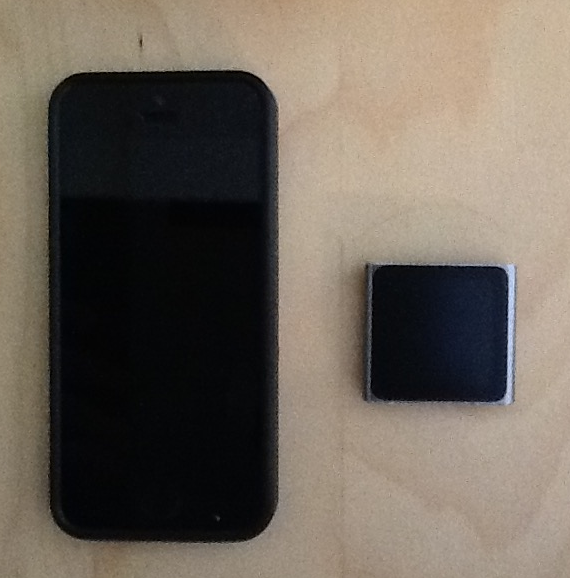
8. I don't run with an iPhone. And I am in the minority. Because I run outside several times a week, I typically run laps around San Francisco and I end up passing a lot of fellow runners. 90% of those running have their iPhones on them. I, on the other hand, do not. For many simple and personal reasons. The main reason is that it's heavy and bulky. The iPod nano 6th gen (with the clip and Nike+ tracking) is a runner's dream device. I use it every day. It also has incredible battery life; my iPhone does not. It holds 10,000 songs and my iPhone most certainly does not. My iPod Nano doesn't require holding it in my hand or require me to attach a giant armband (that honestly breaks every time) to my arm. So I leave my iPhone at home. Because I do this, you also can't reach me when I'm out on a run. While no one really cares that I'm unavailable for a few hours every week, I also won't post pictures taken during a run. I'd probably like to, but not enough that I would try juggling an iPhone on my arm during a 16 mile run. I only carry my iPhone when I am in a new place, like going on a random run down the beach in Mexico, getting lost on a jog through Lima, or running in the dark (its flashlight is awesome).


iPhone 6s vs iPod Nano 6th gen
Which would you choose to carry on a 10+ mile run?

9. I do run with a safety net; I carry my clipper card. I bring my bus pass with me on every long run just in case. To date, I have never had to stop mid-run nor been stranded miles from home. But in the event that I do have to stop for any number of valid reasons, I know I can always hop on a bus and be home shortly. I did this after my 12K a few weeks ago. The race ended miles from my home and since I didn't have my iPhone with me, I couldn't call a friend or even a cab. So I took the bus. And I was home in a snap. It was awesome. Because going out on a 14 mile run is difficult enough for me, knowing that if I'm having an off day or a bad run, I can always get home. This makes me feel okay. And that takes a load off my already jumpy nerves.

10. I wish all my toenails were gone. Currently, I've only got about seven remaining. And there are another one or two that are so badly bruised they should be falling off soon. The remaining toenails I wish would just hit the road. Currently, having toenails only adds to the pain. If I didn't have any nails on my toes, they wouldn't rub in my shoes and wouldn't cause any pain. And, thus, life would be better (don't worry, you don't have to see my nail-less toes; I don't typically wear sandals). If the first thing that comes to mind when I mention removing my toenails is torture, you would technically be correct. While the ripping off of toenails has been used as a mechanism of torture, simply allowing us runners (or maybe just me) to remove our whole toenails would actually make us very happy.

11. I love to talk about running, but it's not my whole life. I also talk about the book I'm reading, the trip I'm taking, what's new with my family, how things are going with my start-up company, and some of the new volunteer projects I've got going on. But I do talk A LOT about running. I'm not obsessed, I'm just in new territory and I'm scared. It's always in the back of my mind; what does this week look like? When will I fit my long run in? What will I do for my shorter runs and sprints and cross-training? Do I have everything I need to run my best run? What are my goals for the week? These thoughts (and more) are constantly running through my mind. So yeah, I may seem a little running obsessed lately. But I'm new to the run-life balance. I'd like to think I'm getting better at it every passing week.


So that's a look at what running is like for me. We all feel differently about running. But hopefully you too have wondered HOW your elbows manage to sweat. Or perhaps your loved ones also think that when you foam roll you're simply inflicting unnecessary pain on yourself and they will never enjoy doing it themselves. Or maybe you love taking mid-run selfies and I'm nuts to run without an iPhone (it certainly appears that way). Whatever gets you from mile 0 to mile 1 and all the way to mile 26 is what matters. For me, it involves a heavy amount of toe bandaging and dozens of sugar cookies. And lacing up my shoes for yet another 2+ hour run. And loving (almost) every minute of it.